When your iPhone develops a problem, you want it fixed quickly.
You may think the solution is simple. Maybe the screen needs to be changed. Maybe the battery needs to be replaced. Or perhaps the charging port is damaged.
But iPhone repair is not always that simple.
Sometimes, the part that looks damaged is not the real cause of the problem. The fault may be inside the iPhone motherboard.
This is why choosing the right repair technician is important.
A good technician should first find out what is wrong before replacing any part.
Many people believe that repairing an iPhone simply means changing a faulty part.
That is not always true.
For example, your iPhone may not be charging. The first thought may be that the charging port is bad.
But the charging port may not be the problem.
There could be a fault on the motherboard or in the charging circuit.
The same thing can happen when an iPhone does not turn on, keeps restarting, or has other problems.
If a technician changes parts without checking the real problem, you may spend money without fixing the phone.
This is why proper diagnosis comes first.
Before repairing an iPhone, the technician should try to find the real cause of the problem.
This is called diagnosis.
A technician may use different tools to check the phone. These can include a digital multimeter, DC power supply, microscope and other diagnostic tools.
The technician may check:
Proper diagnosis helps the technician choose the right repair.
It can also help prevent unnecessary part replacement.
Sometimes an iPhone really does need a replacement part.
When this happens, the quality of the part matters.
There are different types and qualities of replacement parts in the market. A technician should know the difference and choose a suitable part for the repair.
The part should also be installed correctly.
Using a suitable part and installing it properly can make a big difference to the repair.
Modern iPhones are very complex.
Their components are small, especially on the motherboard. Because of this, advanced iPhone repair requires proper tools.
Some of the tools used by professional technicians include:
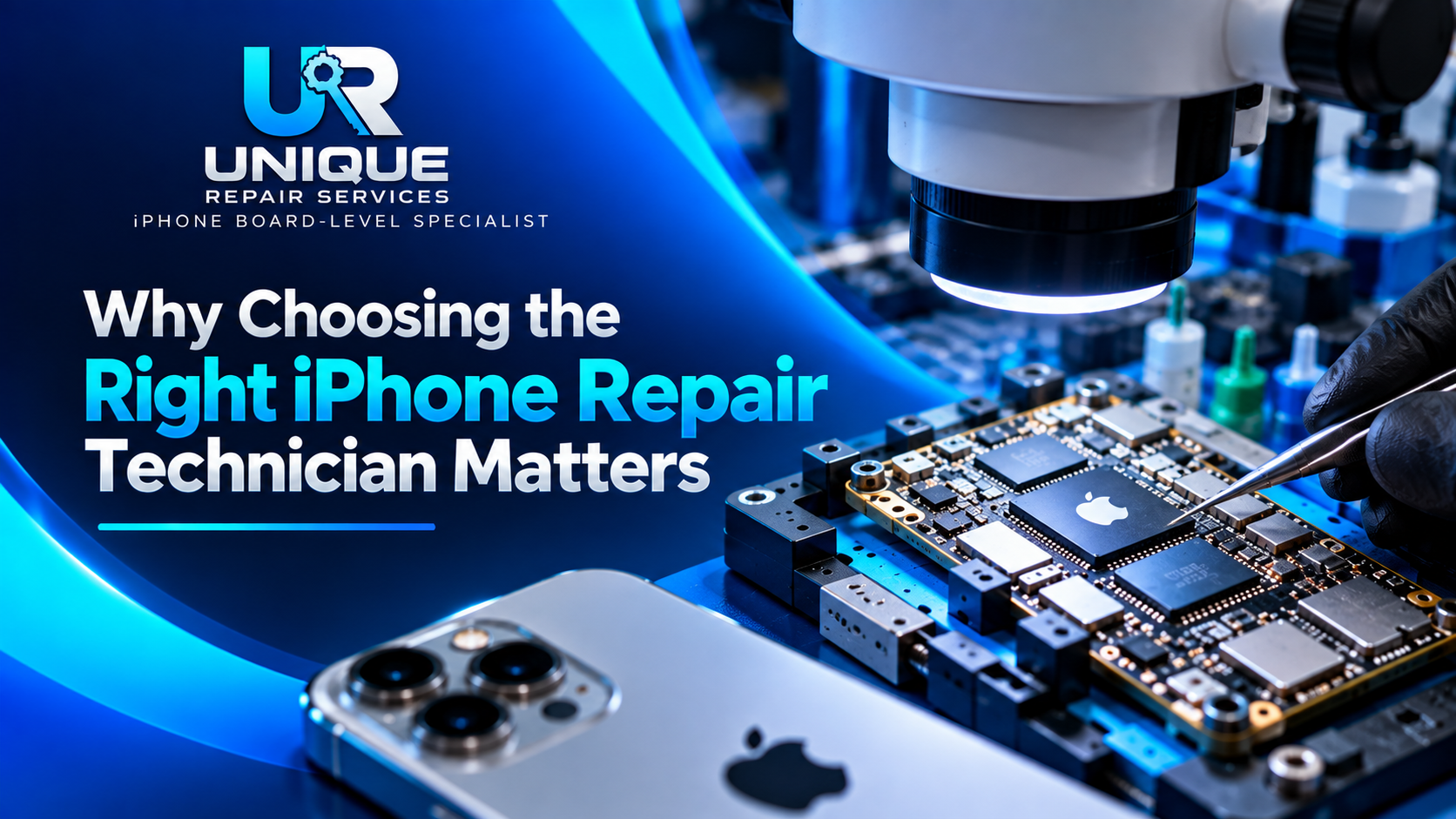
A microscope, for example, allows a technician to see very small components on the motherboard.
A DC power supply can help with certain power-related tests.
A multimeter can help the technician measure different electrical values.
The right tools help a technician work with better control and accuracy.
Not every iPhone problem can be fixed by changing a part.
Sometimes the problem is on the motherboard.
This is where board-level repair comes in.
Board-level repair means working directly on the iPhone motherboard.
It can involve:
These repairs require special skills and equipment.
The technician must work carefully because the components on an iPhone motherboard are extremely small.
However, not every iPhone needs board-level repair.
A proper diagnosis should come first.
Your iPhone may contain important personal information.
You may have family photos, contacts, documents, business information and other private files on the phone.
This is why you should also think about data safety when choosing a repair technician.
If possible, always keep a backup of your important information.
A technician should also handle your phone responsibly and respect your privacy.
Before a complicated repair, ask if there is any possible risk to your data.
It is better to understand the risks before the repair starts.
Repairing the phone is not the final step.
The phone should also be tested after the repair.
The tests will depend on the problem the phone had.
For example, if the problem was charging, the technician should check the charging function.
If the problem was the display, the display and touch should be checked.
Other things that may need to be tested include:
Testing helps confirm that the repair has been completed properly.
Before you repair your iPhone, ask if the repair comes with a warranty.
A warranty gives you a clear understanding of what happens if the same problem comes back within the agreed period.
Ask the technician:
Always make sure you understand the warranty before approving the repair.
You do not need to be a technician to ask questions.
Before handing over your iPhone, you can ask:
What is causing the problem?
This helps you understand what the technician has found.
Does the phone need a new part or board repair?
This tells you what type of repair is being considered.
What type of part will you use?
Ask about the quality and suitability of the replacement part.
Could the repair affect my data?
This is especially important for complicated repairs.
Will you test the phone after the repair?
Testing is an important part of a proper repair.
Is there a warranty?
Ask about the warranty before the repair begins.
A professional repair should normally follow a clear process.
The technician examines the iPhone and listens to the customer's complaint.
The technician performs the necessary tests to find the cause of the fault.
The technician explains what is wrong and what needs to be done.
The technician uses the right tools and repair method.
The repaired functions are checked.
The customer receives the phone and information about the repair and any applicable warranty.
This simple process helps make the repair clearer and more professional.
When you give your iPhone to a technician, you are trusting that person with an expensive device.
You may also be trusting them with your personal information.
That is why trust is important.
A good repair service should communicate clearly with customers. The technician should explain the problem and the proposed repair in a way the customer can understand.
The goal should not be to replace as many parts as possible.
The goal should be to find the real problem and fix it correctly.
At Unique Repair Services, our focus is professional iPhone repair.
We specialise in iPhone board-level repair and micro-soldering.
Our approach starts with understanding the problem before deciding on the repair.
We believe that every repair should be handled with care, proper tools and the right technical knowledge.
We also believe that learning never stops.
As iPhone technology changes, repair techniques and tools also continue to change.
That is one of the reasons we created this blog. We want to share useful information about iPhone repair, repair tools, technology and the work that happens behind the scenes.
Choosing an iPhone repair technician is an important decision.
Do not look at price alone.
Ask questions.
Find out what is wrong with your phone. Ask what needs to be repaired. Ask about the replacement part, data safety, testing and warranty.
Most importantly, choose a technician who understands the repair and has the right tools and skills for the job.
Professional iPhone repair is not just about changing parts. It is about finding the problem and choosing the right solution.
iPhone Board-Level Specialist
Onitsha Main Market, Anambra State, Nigeria
SEO Title:
Why Choosing the Right iPhone Repair Technician Matters
Meta Description:
Learn why choosing the right iPhone repair technician matters, from proper diagnosis and quality parts to board-level repair and testing.
URL Slug:
why-choosing-the-right-iphone-repair-technician
Suggested Tags:
iPhone Repair, iPhone Repair Technician, iPhone Board Repair, Micro-Soldering, iPhone Motherboard Repair, iPhone Repair Tips, Onitsha iPhone Repair
When your iPhone develops a problem, you want it fixed quickly.
You may think the solution is simple. Maybe the screen needs to be changed. Maybe the battery needs to be replaced. Or perhaps the charging port is damaged.
But iPhone repair is not always that simple.
Sometimes, the part that looks damaged is not the real cause of the problem. The fault may be inside the iPhone motherboard.
This is why choosing the right repair technician is important.
A good technician should first find out what is wrong before replacing any part.
Many people believe that repairing an iPhone simply means changing a faulty part.
That is not always true.
For example, your iPhone may not be charging. The first thought may be that the charging port is bad.
But the charging port may not be the problem.
There could be a fault on the motherboard or in the charging circuit.
The same thing can happen when an iPhone does not turn on, keeps restarting, or has other problems.
If a technician changes parts without checking the real problem, you may spend money without fixing the phone.
This is why proper diagnosis comes first.
Before repairing an iPhone, the technician should try to find the real cause of the problem.
This is called diagnosis.
A technician may use different tools to check the phone. These can include a digital multimeter, DC power supply, microscope and other diagnostic tools.
The technician may check:
Proper diagnosis helps the technician choose the right repair.
It can also help prevent unnecessary part replacement.
Sometimes an iPhone really does need a replacement part.
When this happens, the quality of the part matters.
There are different types and qualities of replacement parts in the market. A technician should know the difference and choose a suitable part for the repair.
The part should also be installed correctly.
Using a suitable part and installing it properly can make a big difference to the repair.
Modern iPhones are very complex.
Their components are small, especially on the motherboard. Because of this, advanced iPhone repair requires proper tools.
Some of the tools used by professional technicians include:
A microscope, for example, allows a technician to see very small components on the motherboard.
A DC power supply can help with certain power-related tests.
A multimeter can help the technician measure different electrical values.
The right tools help a technician work with better control and accuracy.
Not every iPhone problem can be fixed by changing a part.
Sometimes the problem is on the motherboard.
This is where board-level repair comes in.
Board-level repair means working directly on the iPhone motherboard.
It can involve:
These repairs require special skills and equipment.
The technician must work carefully because the components on an iPhone motherboard are extremely small.
However, not every iPhone needs board-level repair.
A proper diagnosis should come first.
Your iPhone may contain important personal information.
You may have family photos, contacts, documents, business information and other private files on the phone.
This is why you should also think about data safety when choosing a repair technician.
If possible, always keep a backup of your important information.
A technician should also handle your phone responsibly and respect your privacy.
Before a complicated repair, ask if there is any possible risk to your data.
It is better to understand the risks before the repair starts.
Repairing the phone is not the final step.
The phone should also be tested after the repair.
The tests will depend on the problem the phone had.
For example, if the problem was charging, the technician should check the charging function.
If the problem was the display, the display and touch should be checked.
Other things that may need to be tested include:
Testing helps confirm that the repair has been completed properly.
Before you repair your iPhone, ask if the repair comes with a warranty.
A warranty gives you a clear understanding of what happens if the same problem comes back within the agreed period.
Ask the technician:
Always make sure you understand the warranty before approving the repair.
You do not need to be a technician to ask questions.
Before handing over your iPhone, you can ask:
What is causing the problem?
This helps you understand what the technician has found.
Does the phone need a new part or board repair?
This tells you what type of repair is being considered.
What type of part will you use?
Ask about the quality and suitability of the replacement part.
Could the repair affect my data?
This is especially important for complicated repairs.
Will you test the phone after the repair?
Testing is an important part of a proper repair.
Is there a warranty?
Ask about the warranty before the repair begins.
A professional repair should normally follow a clear process.
The technician examines the iPhone and listens to the customer's complaint.
The technician performs the necessary tests to find the cause of the fault.
The technician explains what is wrong and what needs to be done.
The technician uses the right tools and repair method.
The repaired functions are checked.
The customer receives the phone and information about the repair and any applicable warranty.
This simple process helps make the repair clearer and more professional.
When you give your iPhone to a technician, you are trusting that person with an expensive device.
You may also be trusting them with your personal information.
That is why trust is important.
A good repair service should communicate clearly with customers. The technician should explain the problem and the proposed repair in a way the customer can understand.
The goal should not be to replace as many parts as possible.
The goal should be to find the real problem and fix it correctly.
At Unique Repair Services, our focus is professional iPhone repair.
We specialise in iPhone board-level repair and micro-soldering.
Our approach starts with understanding the problem before deciding on the repair.
We believe that every repair should be handled with care, proper tools and the right technical knowledge.
We also believe that learning never stops.
As iPhone technology changes, repair techniques and tools also continue to change.
That is one of the reasons we created this blog. We want to share useful information about iPhone repair, repair tools, technology and the work that happens behind the scenes.
Choosing an iPhone repair technician is an important decision.
Do not look at price alone.
Ask questions.
Find out what is wrong with your phone. Ask what needs to be repaired. Ask about the replacement part, data safety, testing and warranty.
Most importantly, choose a technician who understands the repair and has the right tools and skills for the job.
Professional iPhone repair is not just about changing parts. It is about finding the problem and choosing the right solution.
iPhone Board-Level Specialist
Onitsha Main Market, Anambra State, Nigeria
SEO Title:
Why Choosing the Right iPhone Repair Technician Matters
Meta Description:
Learn why choosing the right iPhone repair technician matters, from proper diagnosis and quality parts to board-level repair and testing.
URL Slug:
why-choosing-the-right-iphone-repair-technician
Suggested Tags:

A new location, same trusted expertise! Join us on 29th September 2026 as Unique Repair Services officially reopens at Shop B27, Patchyke Plaza, opposite Emeka Offor Plaza, Onitsha Main Market. Visit us for professional iPhone repairs, advanced motherboard Repair